Learn · Focus
Focus, explained calmly — and how to practise it
Focus is the ability to hold your attention on one thing and gently set aside everything else — the buzzing notification, the half-formed worry, the urge to check the feed. It isn't a fixed trait you either have or don't. It's more like a direction you keep choosing, and like anything you practise, the choosing gets a little easier.
What short brain games can — and can't — do
Here is the honest version. When you practise a focus task, you reliably get better at that task, and you tend to feel clearer and more deliberate during and just after a session. Researchers call this near-transfer, and it's well supported.
What the evidence does not support is the loud promise on so many apps: sweeping, lasting gains in everyday intelligence, or protection from decline. So Facette simply doesn't say that. You'll get good at these exercises and enjoy a calmer, more focused few minutes — nothing inflated, nothing to disappoint you later.
How to actually practise
- Short and daily beats long and rare. Five focused minutes you keep up will do more than an hour you abandon after three days.
- Stay at your edge. Attention grows when a task is challenging but achievable — hard enough to hold you, easy enough to keep going.
- Make it calm, not frantic. Practising focus in a loud, punishing app trains the wrong nervous system. The room should be quiet.
Practising focus in Facette
Facette gives you a few of these minutes each day: short games that ask for your attention and adapt to your level, keeping you in that sweet spot around 80% success. In Colour-Word, for example, you name the colour of a word while its meaning tries to pull you the other way — a classic test of attention and inhibition. Mistakes are met with a calm amber, never an alarm.
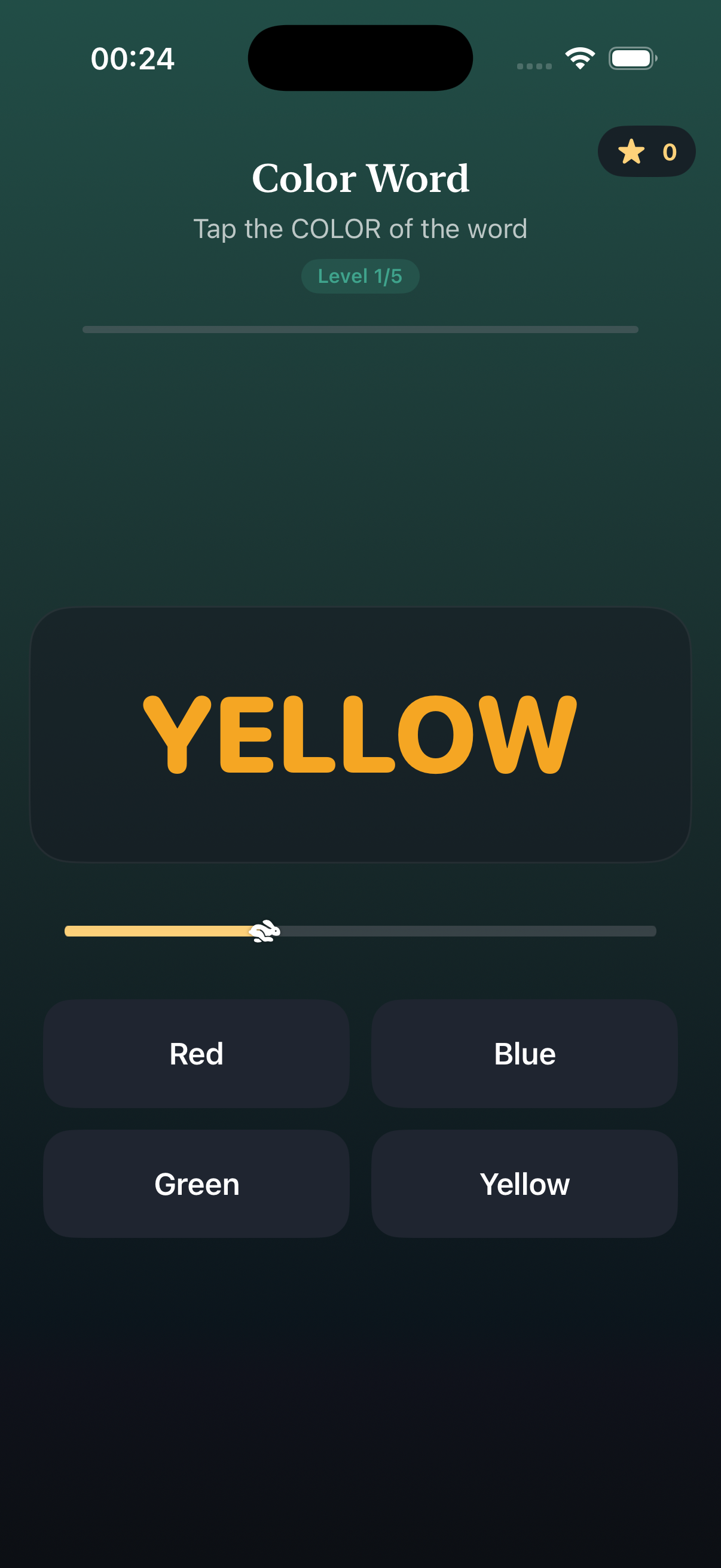
It's deliberately calm and ad-free, it runs entirely on your device, and it never plays itself: every step is a choice you make. Five minutes for your mind — and then you put the phone down.