Learn · Spatial
Spatial reasoning & mental rotation, explained calmly
Spatial reasoning is how your mind pictures objects and moves them around in imagination — rotating a shape, tracing a path, judging whether two figures match or are mirror images. Mental rotation is one clear slice of it: turning a form in your head to see it from another angle. It's less a fixed talent than a way of seeing you can quietly sharpen with practice.
What short daily practice can — and can't — do
With a little daily practice you get genuinely quicker and more accurate at exactly these tasks — spotting a rotated shape, planning a route through a grid, holding a figure steady in your mind's eye while you turn it. Many people also notice the effort feels lighter over time, and the few minutes tend to leave them clear-headed and focused rather than frazzled. Researchers call this near-transfer, and it's well supported.
What it won't do is redesign how you read a map in daily life, or protect your brain from anything — the evidence points to near-transfer, meaning the gains stay close to the tasks you actually practise. So that's all Facette promises: you'll get good at these exercises and enjoy a clear-headed few minutes, nothing inflated to disappoint you later.
How to practise
Keep it short and regular — a few minutes on most days does more than a long session you abandon. Stay at your edge, where a puzzle is hard enough to hold your attention but still solvable, and let yourself picture the movement before you commit to an answer. Above all keep it unhurried: spatial thinking sharpens best when you're calm, not racing a punishing clock.
Practising this in Facette
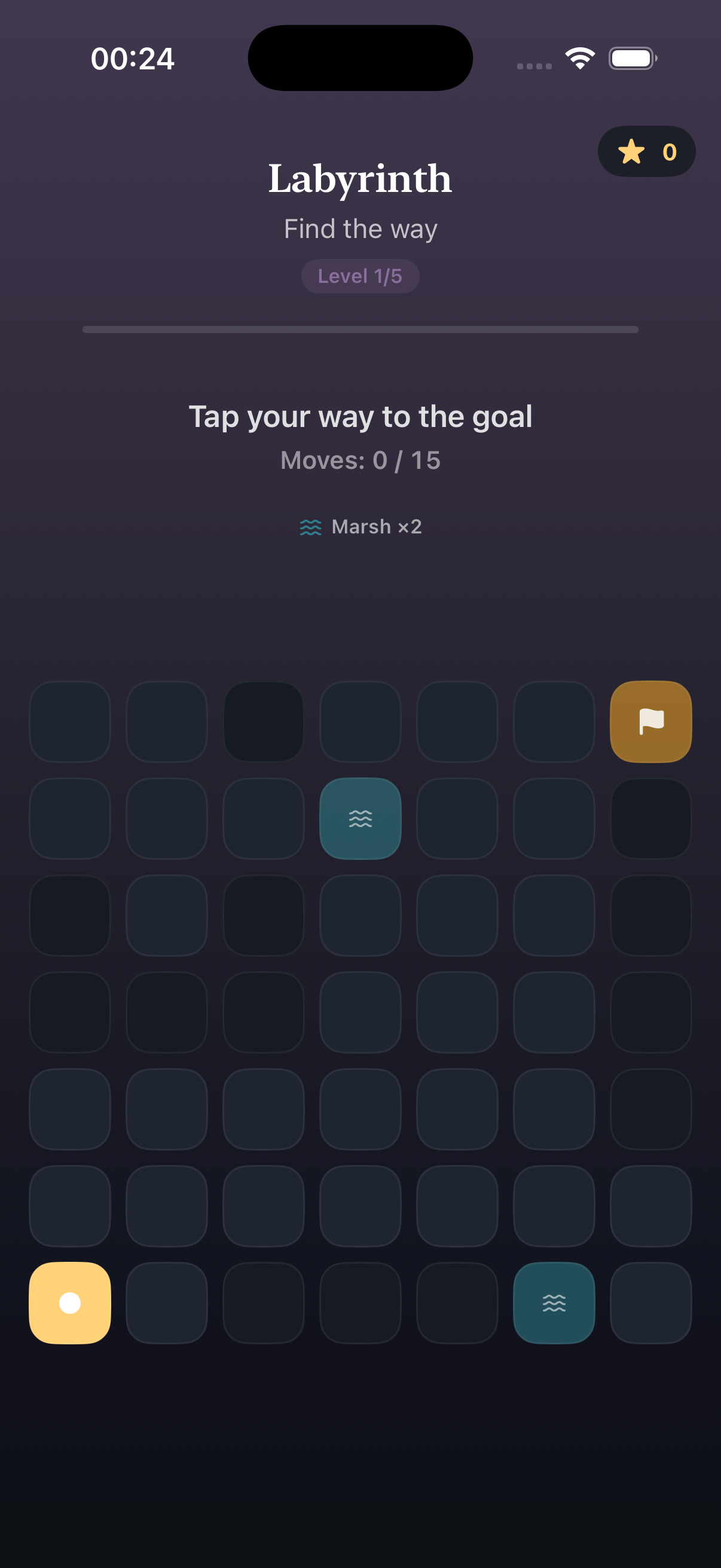
Facette gives you a few of these minutes each day and adapts to keep you near that 80%-success sweet spot. In Torque you decide whether two figures are the same shape rotated or a mirror image — mental rotation, distilled to a single question. In Maze you trace a path from start to goal through a grid without crossing a wall, planning the route in your head before you tap. Both are calm and ad-free, run entirely on your device, and never play themselves — every move is yours.
Try Facette — free on iPhone, iPad & Mac
Questions & answers
Can brain games improve spatial reasoning?
You reliably get faster and more accurate at the trained tasks — rotating shapes, finding paths — and often feel sharper during a session. That's near-transfer, and it's well supported. Broad claims about a higher IQ or permanent life changes are not, so Facette doesn't make them.
What is mental rotation?
Mental rotation is turning an object in your imagination to see it from another angle — for instance, deciding whether two figures are the same shape rotated or mirror images of each other. It's a core part of spatial reasoning, and Facette's Torque game practises exactly this.
How long should I practise?
A few focused minutes a day is plenty to keep the habit alive. Consistency matters far more than length — five calm minutes you keep up beats a long session you drop after a week.